01
Only independents
Only businesses that passed the published Project Independent eligibility test would appear in the independent discovery layer.
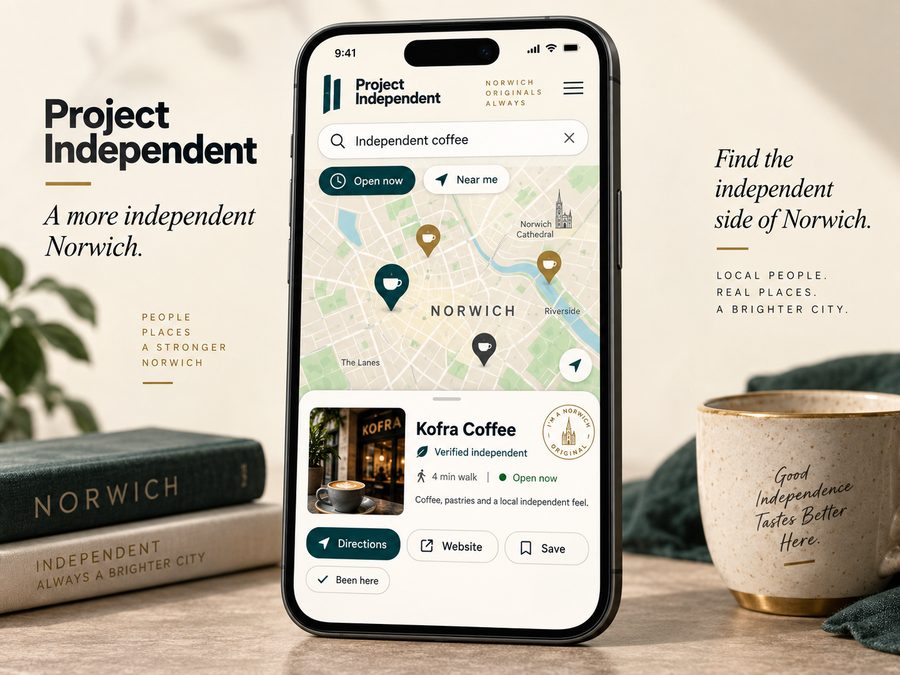
Project Independent is developing a map-first app for discovering genuinely independent cafés, pubs, restaurants, shops, makers, markets and local experiences — with eligibility to be verified by Project Independent, easy to find and never ranked by who pays most.
Every business included in the proposed independent discovery layer would be verified by Project Independent — never self-certified. Concept site · pilot-development phase.
National brands have an important place in any successful city. The proposed service would give the genuinely independent layer its own visibility — helping people find the businesses that make one place feel different from the next.
Project Independent is deliberately focused on the part of a place that is hardest to filter for elsewhere: businesses that are genuinely independent and rooted in the place. Under the proposed model, eligibility would be checked by Project Independent rather than self-declared by the business.
Only businesses that passed the published Project Independent eligibility test would appear in the independent discovery layer.
Project Independent would check eligibility, record the basis for the decision and provide a correction and appeal route. The business would not award itself the mark.
Businesses would not buy their way to the top. Saves, QR scans and money would not become a hidden popularity ranking.
What genuinely independent places are near me right now? The proposed app would start with the verified-independent filter, then make it useful with map-first discovery, open-now, directions, profiles and curated local trails.
Concept screen only — the consumer product is not yet live.
The proposed public experience comes first. The same independent-only model could also give businesses fair visibility and give place partners a practical way to support local distinctiveness.
Find genuinely independent places nearby without already knowing their names — using a simple map-first app built around discovery rather than reviews or paid ranking.
Qualifying businesses could gain a verified profile, a visible place mark and a clearer voice without buying ranking or competing with larger marketing budgets.
Fund a proposed independent-business layer, public discovery, physical visibility and an evidence framework that would not overstate what the data proves.
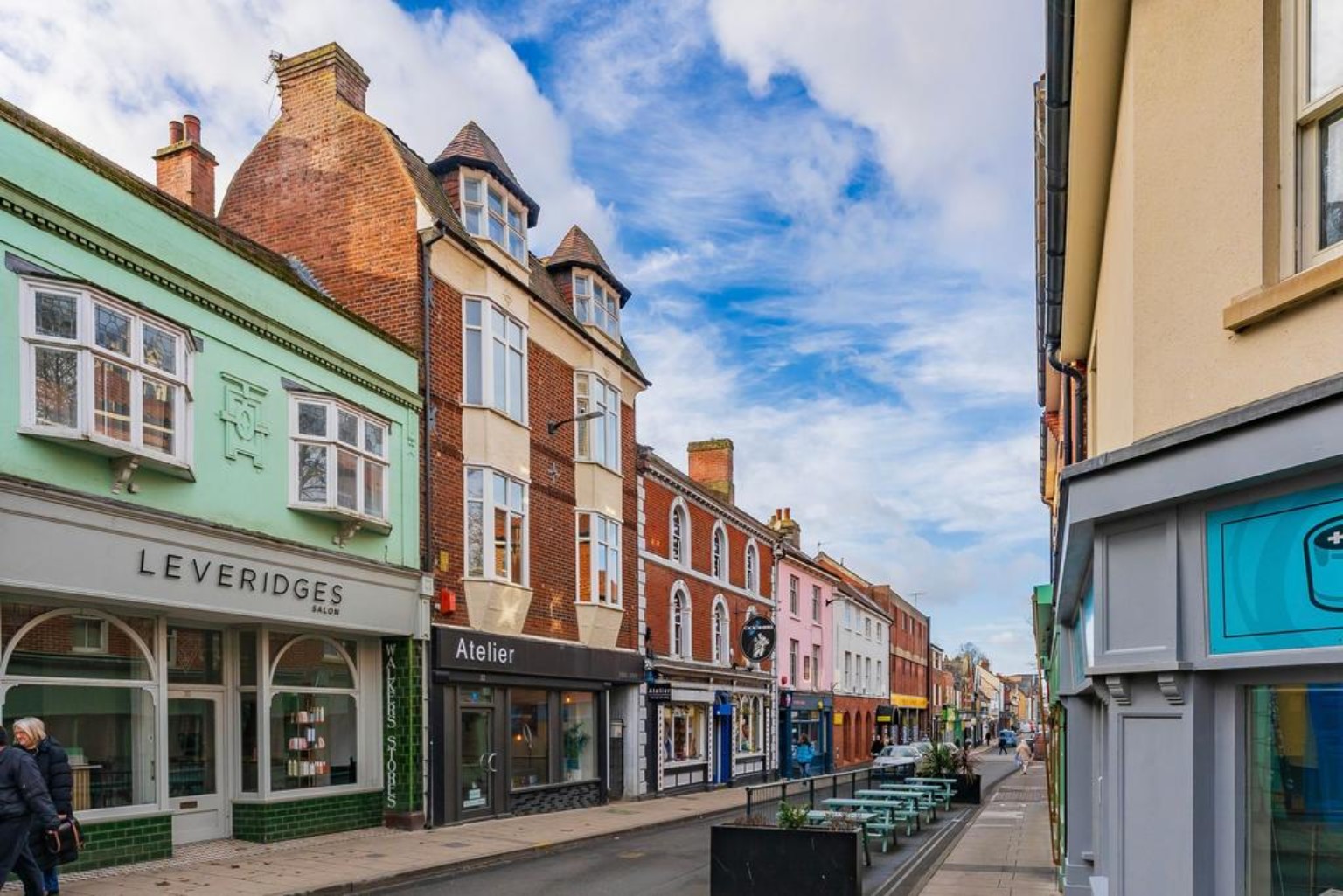
The proposed pilot would begin with the places and street texture that make Norwich recognisable, while avoiding the claim that the businesses pictured are already participants.


The evidence does not prove that independents cause tourism. It does show that Norwich's independent scene, local character and distinctive high streets are repeatedly used to explain and market what makes the city special.
Norwich was The Sunday Times' UK winner for 2026; local coverage highlighted its independent shops alongside culture, community and historic character. Source →
VisitNorwich describes the Norwich Lanes as the city's “independent heart” and says the area has more than 300 independent retailers, cafés, restaurants, pubs and bars. Source →
Norwich BID's 2025 State of the City report says 84.4% of Norwich businesses employ 0–9 people, describing a strong independent and small-enterprise culture. Source →
Big brands provide familiarity. Independents provide distinctiveness. Project Independent is being designed to make that distinctive layer easier to find.
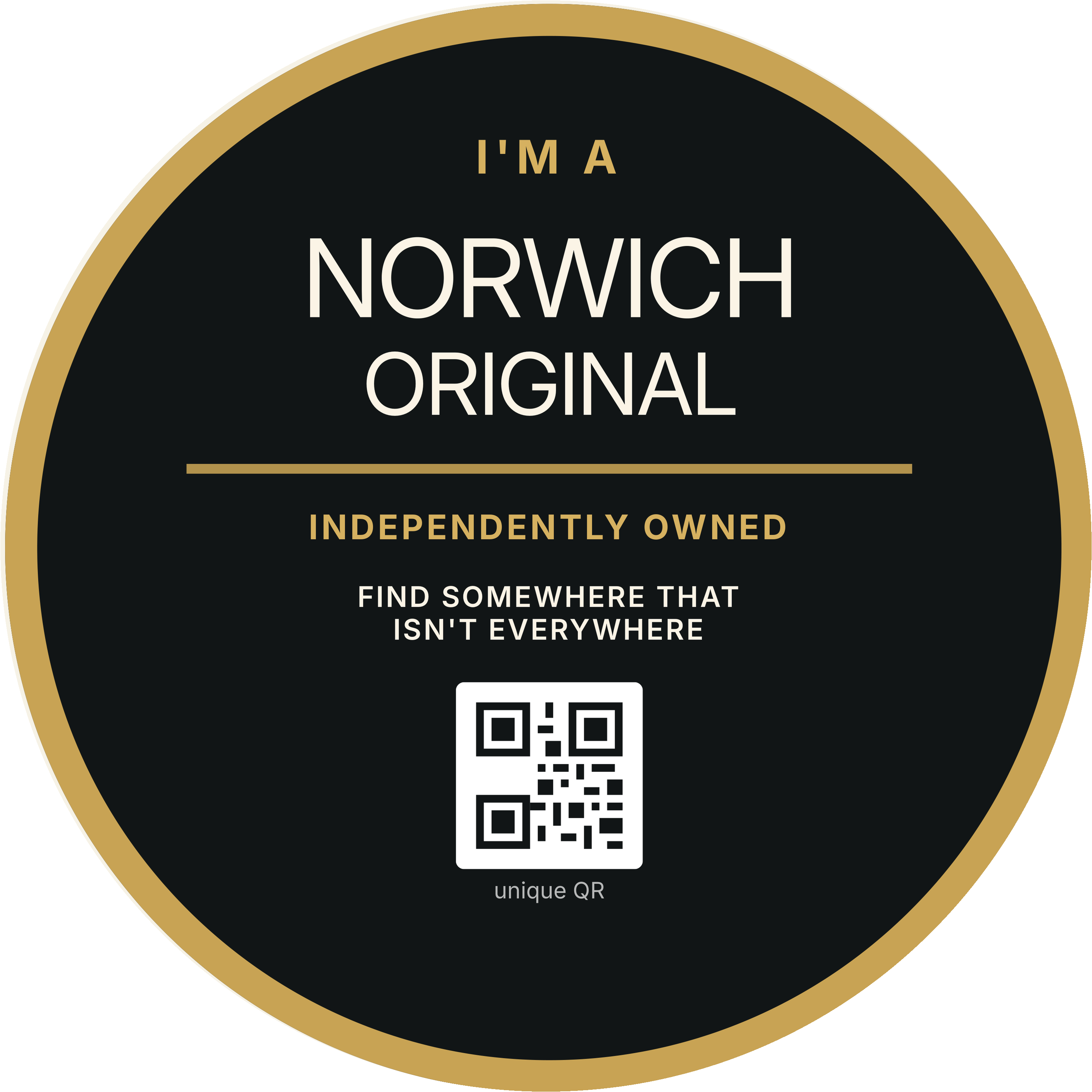
In the proposed flow, the round Norwich Original mark would be the physical layer. Each participating business would receive its own QR, linking to that verified profile and then the wider independent discovery experience.
Recognise the round place mark in a real window.
A unique QR would open that business's verified profile.
Continue into nearby independents and editorial trails in the proposed app.
The scan would be reported honestly as physical-location engagement — not a purchase or verified visit.
In a future pilot, a direction request would indicate intent. A website click would be onward action. A unique badge scan would be physical-location engagement. “I've been here” would be self-reported. None would automatically establish footfall or economic impact.